

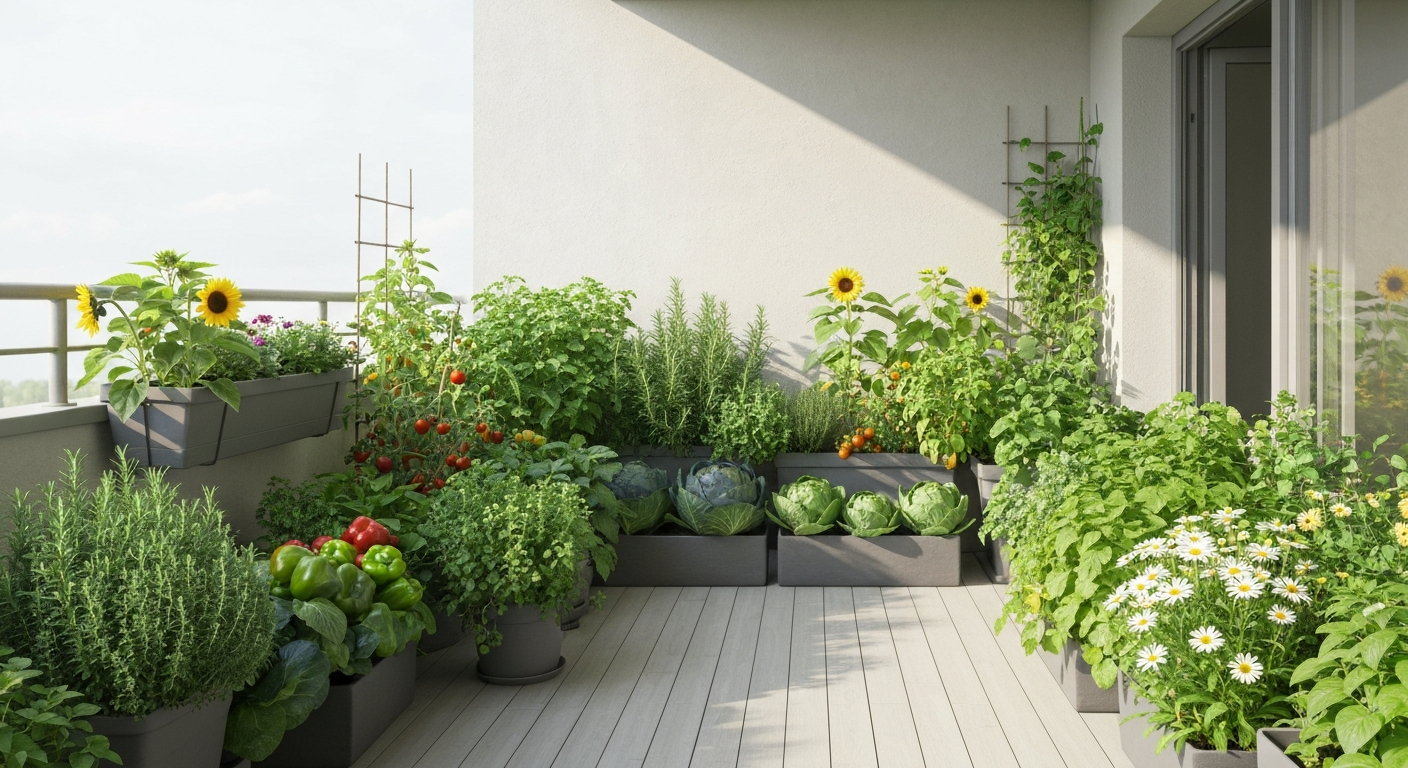
Guide to Your First Urban Garden
You don't need a large plot of land to grow your own food. Discover how to transform your balcony, terrace, or window into a green and productive oasis.
Starting with a pot is still starting. Many people who want to get closer to the rhythms of nature don't start with a farm, a large orchard, or a complete garden. They start with a pot in the window, some plants on the balcony, a cultivation table, or a green corner on the terrace. And that's perfectly fine.
A pot-garden may seem like a small thing, but it teaches a lot: observing the light, understanding the water, touching the substrate, waiting for the times of each plant, accepting mistakes, and celebrating small advances. In small spaces, you learn something essential: you don't need to have everything to start. You need to look better, care consistently, and adjust decisions to the real place we have.
A window, a balcony, or a terrace can be a first school of observation. From there we begin to understand that each space has its own limits, possibilities, and rhythms.
The key is not to do much, but to start with criteria: choose the place well, observe the light, take care of watering, do not overfill, and learn little by little. If there are children or animals at home, it is advisable to choose plants with a little more attention; and if we use ornamental or spontaneous species, it is worth checking that they fit well in our environment. 'Echar RAÍCES' (Taking ROOTS) can also start in a pot.
Paradise in a few square meters
Having an urban garden is one of the most rewarding experiences you can have in the city. It reconnects you with nature's cycles, reduces stress, and provides fresh, organic food with an incomparable taste. To start successfully, you only need to master four key elements: Light, Containers, Substrate, and Water.
1. Sunlight (The limiting factor)
Observe your space before buying seeds. The hours of direct sun will determine what you can grow.
- +6 hours of sun: Tomatoes, peppers, eggplants, cucumbers.
- 3-5 hours of sun: Lettuces, spinach, arugula, chard, radishes.
- Less than 3 hours: Shade-tolerant aromatic plants (mint, parsley) and microgreens.
2. Containers and Pots
Size does matter in the urban garden. Roots need space to develop.
- Large pots (20L+): Tomatoes, zucchini, potatoes.
- Medium pots (10-15L): Peppers, eggplants, chard.
- Planters (15cm deep): Lettuces, radishes, strawberries, aromatics.
- Always make sure they have drainage holes.
3. The Substrate (The soil)
Don't use garden soil in pots, it will compact. You need a light substrate that retains moisture but drains well.
60% Coco coir (adds lightness and retains water)
40% Earthworm castings (provides all necessary nutrients)
4. Watering
Pots dry out much faster than garden soil, especially in summer.
- Stick your finger 3cm into the soil; if it's dry, water it.
- Water early in the morning or at dusk.
- Avoid wetting the leaves to prevent fungi.
- Consider installing drip irrigation if your balcony is large.
Easy crops for beginners
To avoid frustration on your first try, we recommend starting with these crops that grow fast and forgive mistakes:
- ✓Radishes: In less than 30 days from sowing you can harvest them. Ideal for seeing quick results.
- ✓Cut-and-come-again Lettuces: You can keep cutting the outer leaves you need for your salad and the plant will keep growing.
- ✓Cherry Tomatoes: They are much easier to grow than large tomatoes and produce fruit continuously.
- ✓Aromatic Plants: Basil, parsley, chives. They take up little space and will transform your daily meals.